
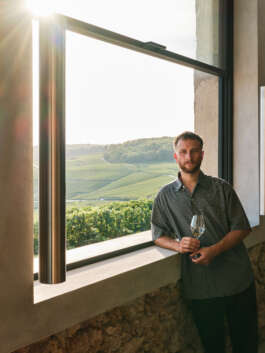
© Valentin Patis by Joseph Alexiadis
COLLECTIBLE Three questions to
Valentin Patis
September 2026
Today, we have the pleasure of speaking with Valentin Patis, a fifth generation winemaker and the driving force behind Patis Pluriel, a Champagne house rooted in the terroirs of the Marne Valley. Bringing together the knowledge of generations of artisan winemakers with a contemporary sensitivity shaped by his background in design, he is exploring new ways of approaching Champagne, from the vineyard and cellar to the spaces and experiences surrounding it. Through regenerative practices, thoughtful vinification, and collaborations with artists, designers, architects, and other creative voices, Patis Pluriel brings together tradition, creativity, and modernity. In our conversation, Valentin Patis shares the ideas behind the house, his approach to bringing creativity into the world of winemaking, and his vision for creating new spaces for encounters between wine, gastronomy, art, design, and landscape.
COLLECTIBLE: How would you describe the identity of Patis Pluriel and the creative vision behind its spaces?
Valentin Patis: Patis Pluriel is deeply rooted in the Champagne vineyards and the terroir of the Marne Valley. At its core is a desire to move forward, explore new approaches, and rethink the way Champagne is made, both in the vineyard and in the cellar. The estate is gradually developing more natural and thoughtful practices, with a strong focus on experimentation and respect for its environment.
This philosophy extends beyond winemaking. With its new project, Le Lavoir, Patis Pluriel is creating a place where wine, gastronomy, art, design, and landscape can come together.
The space is conceived as a place for encounters, creativity, and experimentation, offering immersive experiences where contemporary creation meets wine culture. Through collaborations with chefs, artists, designers, artisans, and other creative voices, Le Lavoir explores new ways of experiencing Champagne while remaining deeply connected to the vineyard, its landscape, and its identity.
C: How has your background in design shaped the way you approach the estate and its creative projects?
VP: My background in design has shaped the way I think about the relationship between agriculture, landscape, and creativity from a long term perspective. It encouraged me to see the vineyard not only as a place of production, but also as a living environment that can become a space for experimentation, observation, and dialogue.
This approach is also reflected in the way we develop our projects. Beyond welcoming visitors, we want to create opportunities for winemakers, designers, artisans, and local actors to meet, exchange ideas, and explore subjects such as regenerative practices, biodiversity, and new ways of working with the land.
In this sense, design becomes a way of connecting people and disciplines, questioning existing practices, and imagining new possibilities together.
C: Patis Pluriel hosts a creative residency at Le Lavoir. What kinds of dialogue or experimentation do you hope it will inspire?
VP: We hope the residency will create a genuine dialogue between designers, artisans, winemakers, and the local landscape. One of the main ambitions is to bring contemporary culture and creative practices into a rural environment, while allowing them to engage with the traditions and identity of Champagne.
The idea is not to separate design from the territory, but to encourage projects that emerge from it, from its materials, landscapes, agricultural practices, heritage, and people. This could result in objects, installations, experiences, or new ways of thinking about how we work with and experience the vineyard.
Ultimately, we want to create an open space where different disciplines can meet, learn from one another, and develop sensitive and meaningful responses to the identity and future of the region.
© Valentin Patis by Joseph Alexiadis
COLLECTIBLE Three questions to
Valentin Patis
September 2026
Today, we have the pleasure of speaking with Valentin Patis, a fifth generation winemaker and the driving force behind Patis Pluriel, a Champagne house rooted in the terroirs of the Marne Valley. Bringing together the knowledge of generations of artisan winemakers with a contemporary sensitivity shaped by his background in design, he is exploring new ways of approaching Champagne, from the vineyard and cellar to the spaces and experiences surrounding it. Through regenerative practices, thoughtful vinification, and collaborations with artists, designers, architects, and other creative voices, Patis Pluriel brings together tradition, creativity, and modernity. In our conversation, Valentin Patis shares the ideas behind the house, his approach to bringing creativity into the world of winemaking, and his vision for creating new spaces for encounters between wine, gastronomy, art, design, and landscape.
COLLECTIBLE: How would you describe the identity of Patis Pluriel and the creative vision behind its spaces?
Valentin Patis: Patis Pluriel is deeply rooted in the Champagne vineyards and the terroir of the Marne Valley. At its core is a desire to move forward, explore new approaches, and rethink the way Champagne is made, both in the vineyard and in the cellar. The estate is gradually developing more natural and thoughtful practices, with a strong focus on experimentation and respect for its environment.
This philosophy extends beyond winemaking. With its new project, Le Lavoir, Patis Pluriel is creating a place where wine, gastronomy, art, design, and landscape can come together.
The space is conceived as a place for encounters, creativity, and experimentation, offering immersive experiences where contemporary creation meets wine culture. Through collaborations with chefs, artists, designers, artisans, and other creative voices, Le Lavoir explores new ways of experiencing Champagne while remaining deeply connected to the vineyard, its landscape, and its identity.
C: How has your background in design shaped the way you approach the estate and its creative projects?
VP: My background in design has shaped the way I think about the relationship between agriculture, landscape, and creativity from a long term perspective. It encouraged me to see the vineyard not only as a place of production, but also as a living environment that can become a space for experimentation, observation, and dialogue.
This approach is also reflected in the way we develop our projects. Beyond welcoming visitors, we want to create opportunities for winemakers, designers, artisans, and local actors to meet, exchange ideas, and explore subjects such as regenerative practices, biodiversity, and new ways of working with the land.
In this sense, design becomes a way of connecting people and disciplines, questioning existing practices, and imagining new possibilities together.
C: Patis Pluriel hosts a creative residency at Le Lavoir. What kinds of dialogue or experimentation do you hope it will inspire?
VP: We hope the residency will create a genuine dialogue between designers, artisans, winemakers, and the local landscape. One of the main ambitions is to bring contemporary culture and creative practices into a rural environment, while allowing them to engage with the traditions and identity of Champagne.
The idea is not to separate design from the territory, but to encourage projects that emerge from it, from its materials, landscapes, agricultural practices, heritage, and people. This could result in objects, installations, experiences, or new ways of thinking about how we work with and experience the vineyard.
Ultimately, we want to create an open space where different disciplines can meet, learn from one another, and develop sensitive and meaningful responses to the identity and future of the region.
