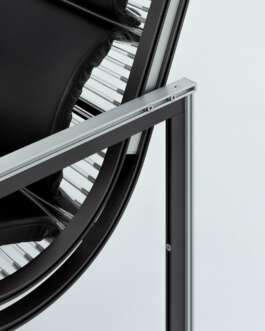
Woojin Park, p(erson)al, PU-T-B Offset Radius 01 (detail), 2026. © Pureum Noh
COLLECTIBLE In-Depth
In Their Words: Human Resources
October 2026
COLLECTIBLE In-Depth goes behind the scenes of contemporary creation. For this edition, we put a single question to each designer in Curated: Human Resources, the section curated by Alex Tieghi-Walker around the late twentieth-century office. Twelve designers on labour, hierarchy and the objects that shape working life.
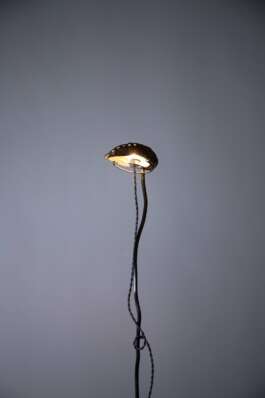
Adi Asia, Abalonia Apollonia, 2026. Abalone shell, chrysocolla and steel, 64" × 14". © Teresa Wang
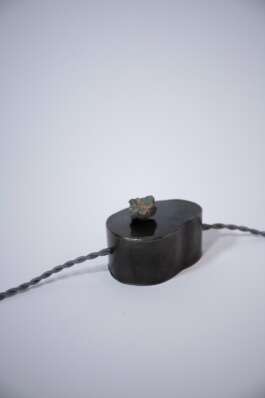
Adi Asia, Abalonia Apollonia (detail), 2026. © Teresa Wang
Adi Asia
I interpreted Human Resources through my interest in the relationship between the body, material, and the objects that structure everyday life. My work often brings together natural and industrial materials, allowing familiar objects to feel slightly strange, bodily, or alive. In Abalonia Apollonia, the familiar floor lamp becomes a sculptural, almost character-like presence. Through the tension between function and ornament, I was interested in how a functional object can move beyond utility and become something more intimate- an object that invites attention, curiosity, and a physical relationship with the person encountering it.
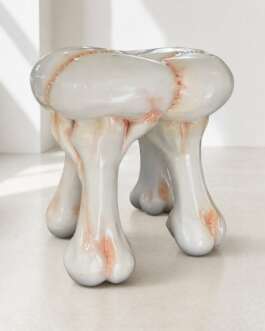
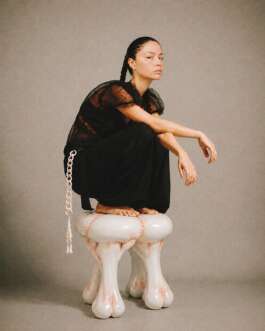
Ciane Xavier, Soft Bone Stool, 2026. Fiberglass, 20" × 19" × 19". © Ciane Xavier
Ciane Xavier, Soft Bone Stool, 2026. © Ciane Xavier
Ciane Xavier
I think about how both people and furniture are often valued for what they can do. In my practice, I’m interested in what exists beyond that function. Soft Bones Stool, part of Domesticate Surrealism, is a seat, but it also has a bodily presence and its own character. I think of it as one body supporting another, rather than just an object being used.
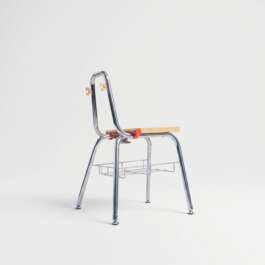
apt4b, Recess Chair (back view), 2026. © apt4b
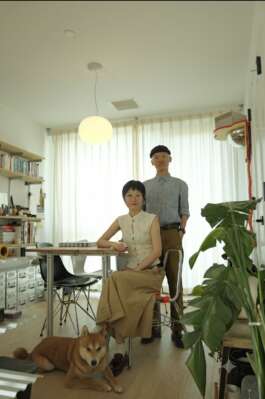
apt4b. © Bolin Chen
apt4b
We wanted to look at the link between playfulness and adult work. Work sometimes comes with repetition and tension, but it can also hold the same spark that makes a kid wind up a tin toy—a simple wish to set things in motion and see what happens next.
With Wind-Up Chair, we want to reframe how we think about daily effort. Rather than seeing the workplace only as a place that drains us, we look at "human resources" as our own inner store of curiosity, focus, and drive. It becomes a hopeful state of readiness—gathering our energy, sitting down with purpose, and gently pushing things forward day by day.
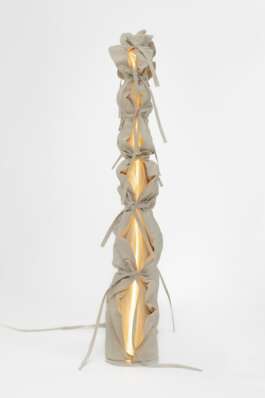
Sadaf Farahanifar, Cover/Uncover, 2026. © Martin Seck
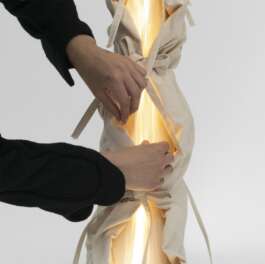
Sadaf Farahanifar, Cover/Uncover (detail), 2026. © Martin Seck
Sadaf Farahanifar
I read Human Resources as a question: are people expected only to adapt to the workplace, or can they shape it? In most offices, light is fixed and people adjust themselves to it. With Cover / Uncover, the relationship reverses: a person wraps, ties, loosens, or compresses the fabric around the lamp, changing the light around them. Their gestures leave the object and the room in a different state. I wanted to make a workplace object that gives some control back to the person living with it.
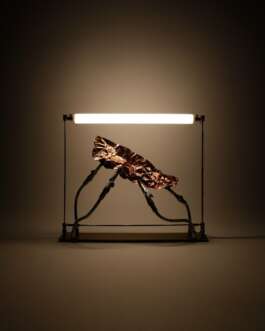
Zhen Li, Touch Memory, 2026. Stainless steel, brass, copper and aluminum, 12" × 2.5" × 10". © Zhen Li
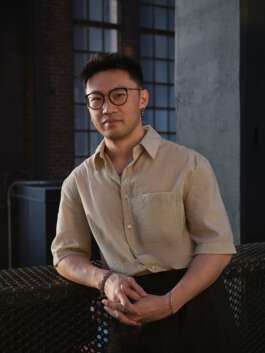
Zhen Li. © Josh Robinson
Zhen Li
Late twentieth-century office design was shaped by a pursuit of efficiency and uniformity, where individuality was often reduced to function, and the human labor behind production became invisible within the systems it sustained.
Touching Memory offers a counterpoint through the slow, repetitive process of hand-hammering copper, where every mark preserves traces of human effort and personal memory. Rather than producing identical objects, the work invites people to leave their own imprints, allowing it to evolve through individual experiences.
Through touch and light, it creates moments of reflection and emotional connection, reminding us of the human presence often overlooked in standardized environments.
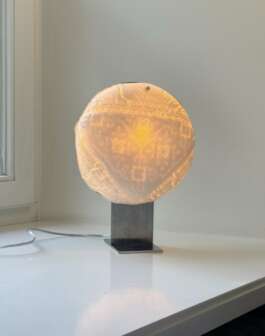
Vittorio Di Girolamo & Xenia Kwiatkowska, Tela, 2026. Porcelain and stainless steel, 37.2 × 28 × 17 cm. © Xenia Kwiatkowska
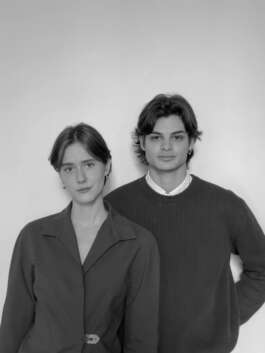
Vittorio Di Girolamo & Xenia Kwiatkowska. © Aleksandra Powalacz
Vittorio Di Girolamo & Xenia Kwiatkowska
Veil subverts standardisation. Where Le Corbusier’s Modulor reduced the environment to a universal measure, Veil starts from the impossibility of repetition: every pour of porcelain slip and every laying of the lace produces a different shade. Each piece is an attempt to break the standard and move towards a warmer, more personal idea of design.
It also undoes hierarchy. The porcelain cannot exist without the handmade lace, nor stand without the steel frame. No material sits above another: each depends on the others, and only together do they build what the light reveals.
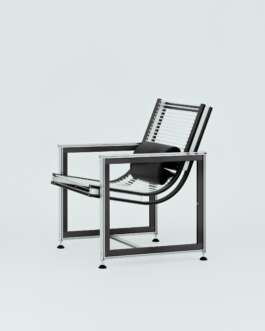
Woojin Park, p(erson)al, PU-T-B Offset Radius 01, 2026. © Pureum Noh
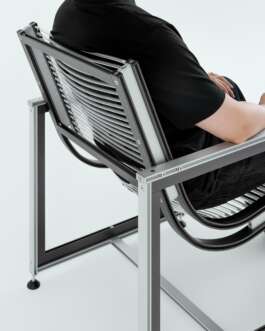
Woojin Park, p(erson)al, PU-T-B Offset Radius 01 (detail), 2026. © Pureum Noh
p(erson)al
My work does not reject standardization but redirects its purpose. In “(PU-T-B) Offset Radius 01,” standardized industrial components, including aluminum profiles, polyurethane tubes, and bolts, are combined in a new way to create a structure with a flexible surface that responds to each user’s weight, body, and posture. The repositionable cushions can also be adjusted to provide support and comfort in the positions each user prefers. Rather than prescribing a single correct posture for productivity, the chair allows each user to shape their own experience. Within this standardized structure, the chair’s form changes according to the user’s body and choices.
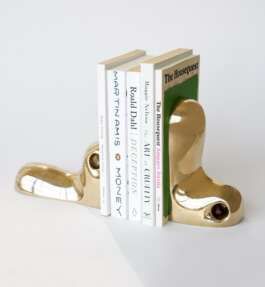
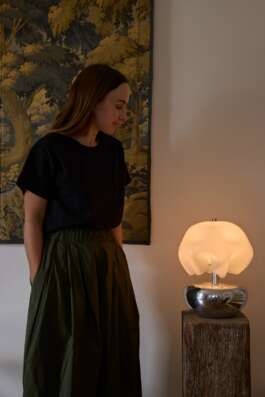
Claire Torok, Clab, Prem L Bookend, 2026. Bronze, 4" × 6". © Trevor Smith
Claire Torok with Prem Lamp. © Ye Rin Mok
Clab
Claire Torok
Bookends are objects of order, meant to keep things in their place. I like the idea that mine quietly challenge that expectation. Their mirrored surfaces turn books and their surroundings upside down, catching the changing light and scattering reflections across walls and ceilings. They still perform their function, but introduce an unexpected moment of curiosity into an otherwise orderly environment. I think those small disruptions are important, especially in spaces shaped by routine and productivity. Design can shift our perspective, sometimes quite literally, and encourage us to look at familiar things differently.
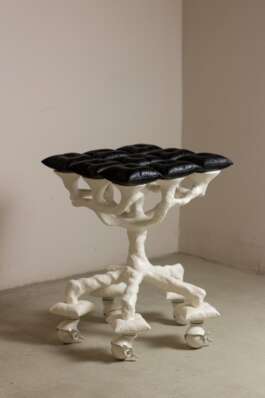
Pedro Pablo Arango & Jacob Paffen, AEXIO, Labour Bloom, 2026. Sand-cast aluminum, resin, upholstered cushions, stainless steel and nylon, 40 × 40 × 45 cm. © AEXIO
AEXIO
Labour Bloom subverts the office’s promise that order leads to ascent. Its leather cushions form a disciplined grid, echoing cubicles and the idea that everyone has an assigned place. Beneath that polished surface, an irregular cast-aluminum structure reveals the pressure and imbalance required to keep the system standing. At the base, cushions fallen from the grid represent those who failed to climb, were pushed out, or were left behind. Yet the hierarchy remains unfinished until someone sits: the body becomes its highest point. The work does not simply depict corporate ambition; it asks the sitter to participate in it.
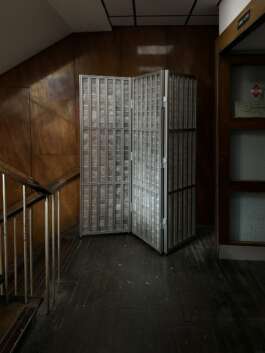
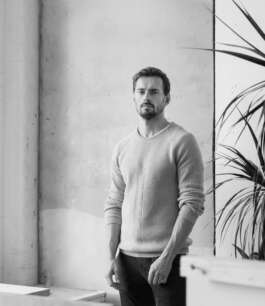
Tino Seubert, Capiz & Aluminium folding screen, 2026. Aluminium extrusions and capiz shells, 180 × 3 × 192 cm. © Tino Seubert
Tino Seubert. © Rosie Harrie Tellis
Tino Seubert
The screen holds two very different kinds of labour. Its 500 Capiz shells are cleaned and sanded before they reach us, to expose the translucent mother-of-pearl within. In the studio, each one is then cut to size, sanded and cleaned again by hand until it fits the pattern exactly. This slow handwork is what remains visible. Behind it, nearly 1,000 3D-printed components, produced over hundreds of hours of machine time, hold the shells in place. They are essential, yet they deliberately step back. The piece shows how manual craft and digital fabrication can coexist, and even thrive together.
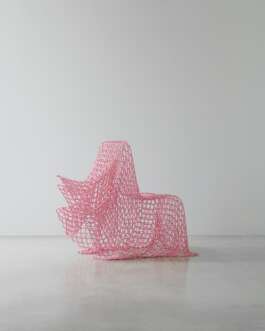
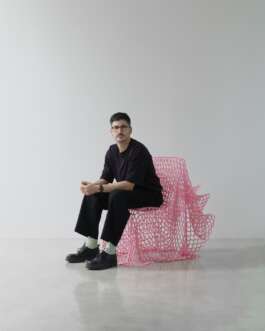
Iranzo, Breeze chair, 2026. Epoxy resin and polypropylene, approx. 105 × 88 × 92 cm. Represented by Difusions. © Iranzo
Iranzo with Breeze chair. © Iranzo
Iranzo
Every object holds the memory of the time that shaped it. We want that memory to remain, so that the piece keeps something of the gesture, the patience and the hesitation of the person who made it. Each piece is made by hand, and that process leaves its trace on the surface: small irregularities, marks, and decisions made with the hands more than the mind. We don’t hide them, because they are the most honest part of the piece. We think of these marks as a form of presence, a way of saying that someone was here, with care. For us, the true value of an object comes from that time shared between the material and the person working it. That, we believe, is where the human in Human Resources truly lives.
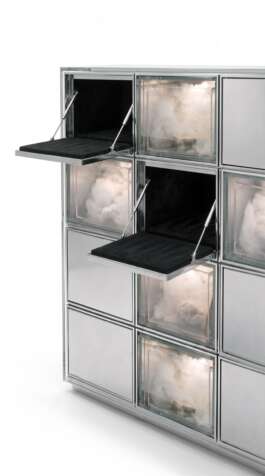

Kristina Saakyan, The Burned-Out Archive, 2026.
Kristina Saakyan.
Kristina Saakyan
Having spent a decade architecting spaces for global corporate institutions, I observed how systemic infrastructure deconstructs human presence. In The Burned-Out Archive, I subverted the clinical typology of Wall Street safety deposit vaults into a monument of contemporary luxury. By contrasting hand-processed polished stainless steel with structural optical glass drawers extending via custom motorized mechanisms, I transform the mundane office filing grid into conceptual micro-architecture. Illuminated from within by an internal 4000K layout, the object exposes absolute void. Collectible design elevates corporate burnout into museum-grade art, transforming the very machinery of routine into an interactive, functional cabinet bar.
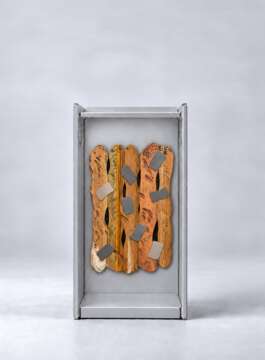
Studio B.C. Joshua, Juke Joint (rendering), 2026.
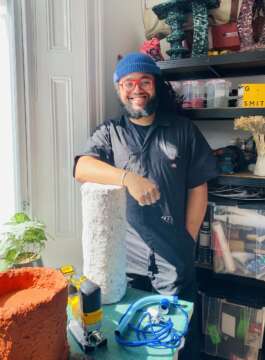
Studio B.C. Joshua. © Studio B.C. Joshua
B.C. Joshua
When looking at traditional typologies like workplace furniture through a collectible lens I think it allows for familiar objects to carry stories and character beyond their function. With my piece, Juke Joint, a precise aluminium structure surrounds a suspended wooden drinks cabinet whose uneven edges, patches and marks remain visible. The name references informal places where African American communities used to gather for music, dancing and socialising after work. As a drinks cabinet, it invites a moment of pause and gathering, bringing festivity and expression into a design language and space usually associated with productivity.
Woojin Park, p(erson)al, PU-T-B Offset Radius 01 (detail), 2026. © Pureum Noh
Adi Asia, Abalonia Apollonia, 2026. Abalone shell, chrysocolla and steel, 64" × 14". © Teresa Wang
Adi Asia, Abalonia Apollonia (detail), 2026. © Teresa Wang
Ciane Xavier, Soft Bone Stool, 2026. Fiberglass, 20" × 19" × 19". © Ciane Xavier
Ciane Xavier, Soft Bone Stool, 2026. © Ciane Xavier
apt4b, Recess Chair (back view), 2026. © apt4b
apt4b. © Bolin Chen
Sadaf Farahanifar, Cover/Uncover, 2026. © Martin Seck
Sadaf Farahanifar, Cover/Uncover (detail), 2026. © Martin Seck
Zhen Li, Touch Memory, 2026. Stainless steel, brass, copper and aluminum, 12" × 2.5" × 10". © Zhen Li
Zhen Li. © Josh Robinson
Vittorio Di Girolamo & Xenia Kwiatkowska, Tela, 2026. Porcelain and stainless steel, 37.2 × 28 × 17 cm. © Xenia Kwiatkowska
Vittorio Di Girolamo & Xenia Kwiatkowska. © Aleksandra Powalacz
Woojin Park, p(erson)al, PU-T-B Offset Radius 01, 2026. © Pureum Noh
Woojin Park, p(erson)al, PU-T-B Offset Radius 01 (detail), 2026. © Pureum Noh
Claire Torok, Clab, Prem L Bookend, 2026. Bronze, 4" × 6". © Trevor Smith
Claire Torok with Prem Lamp. © Ye Rin Mok
Pedro Pablo Arango & Jacob Paffen, AEXIO, Labour Bloom, 2026. Sand-cast aluminum, resin, upholstered cushions, stainless steel and nylon, 40 × 40 × 45 cm. © AEXIO
Tino Seubert, Capiz & Aluminium folding screen, 2026. Aluminium extrusions and capiz shells, 180 × 3 × 192 cm. © Tino Seubert
Tino Seubert. © Rosie Harrie Tellis
Iranzo, Breeze chair, 2026. Epoxy resin and polypropylene, approx. 105 × 88 × 92 cm. Represented by Difusions. © Iranzo
Iranzo with Breeze chair. © Iranzo
Kristina Saakyan, The Burned-Out Archive, 2026.
Kristina Saakyan.
Studio B.C. Joshua, Juke Joint (rendering), 2026.
Studio B.C. Joshua. © Studio B.C. Joshua
