

Sara Devic, Blue Clematis (detail), 2026. © Sahra Jajarmikhayat
COLLECTIBLE In-Depth
In Their Words: Fashion
October 2026
COLLECTIBLE In-Depth goes behind the scenes of contemporary creation. For this edition, we put a single question to each designer in the Fashion section, chaired by Lynette Nylander: how collectible design meets the speed, theatre and retail spaces of fashion.
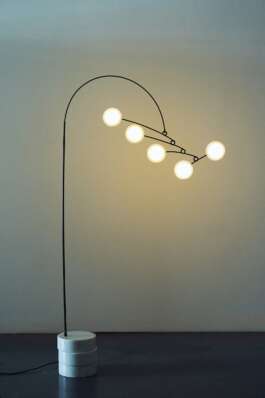
Mary Wallis, Snow Mobile, 2026. Marble, aluminum and organic LEDs, 74" H × 41" W × 9" D. © Paul Barbera
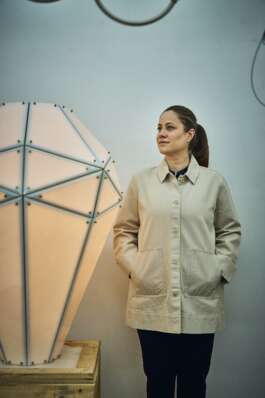
Mary Wallis. © Paul Barbera
Mary Wallis
The intersection of fashion and contemporary collectible design is a reverence for craft, material experimentation, and process. Design extends these ideas into substantial, spatial forms to establish a complete narrative vision. While fashion engages the body directly, design shapes the broader environment, directing movement, sequence, and emotional tone through scale, sound, and light.
This synergy is embodied in Snow Mobile, a work bridging visionary design and emerging technology. Reimagining Alexander Calder’s kinetic sculptures, the project suspends paper-thin, feather-light organic LEDs in calibrated equilibrium, treating light as both structure and atmosphere.
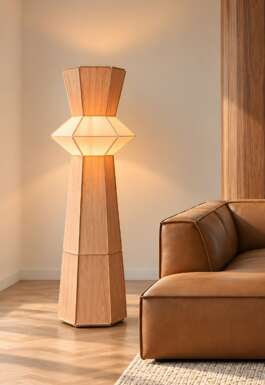
Julie Morringello, Modernmaine, Faro, 2026. © the artist
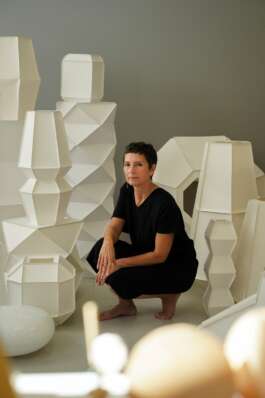
Julie Morringello. © Dan Rajter
Julie Morringello
Modernmaine
There are many parallels between collectible design and haute couture. They're both rooted in experimentation and explore ideas that might not be immediately practical or easily reproducible. But what interests me most is the conversation between experimentation and industry. Discoveries don't necessarily just trickle down into production. Trends, materials, and manufacturing processes can influence couture and collectible design in return. It's a reciprocal exchange, and one I recognize in my own practice.
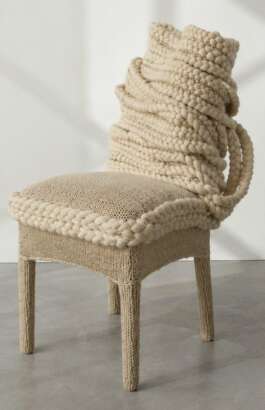

MA RA MI Crafts, Sculptural Wool Chair, 2026. Hand-braided and knitted Transylvanian wool. © MA RA MI Crafts
MA RA MI Crafts. © Andra Camelia Clitan
MA RA MI Crafts
I am interested in how both fashion and collectible design communicate through material, form and the way we experience objects. In my work, textile is not an applied surface but a way of building structure. Working with wool and ancestral techniques allows me to approach an object from a different starting point, where the material and the knowledge behind it determine its form. The intersection with fashion opens up another context for this work, one in which objects contribute to the identity and atmosphere of a space.
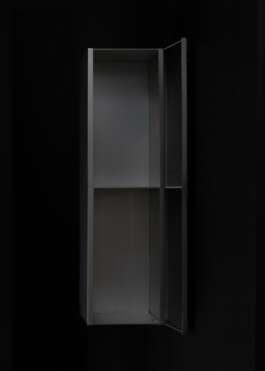

Andy Kim, Harry's Console, 2025. Sandblasted and anodized aluminum, 50 × 11.75 × 17.25 in. © Andy Kim Design and Research Office
Andy Kim. © Andy Kim Design and Research Office
Andy Kim
I don't think furniture or objects are so different from fashion, art, or architecture. Not to generalize, but I believe in furniture, objects, and architecture. I think their responsibility is to create new ways of seeing the pedestrian and the everyday.
In my work, I try to do this through alienation, aesthetics, and scale. Alienation allows us to experience something unfamiliar, to enter a kind of other space where new ideas, new ways of living, and new forms of life become imaginable.
It's a very modern idea, even an old-fashioned one, but I still believe in it somehow. I still believe in the future.
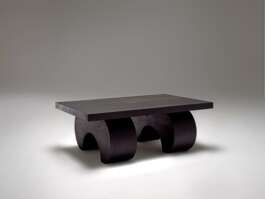
Andrew Sun, Atelier Sun, Bridge Table, 2026. Solid blackened ash wood, 40" × 27.5" × 15". © Joel Esposito
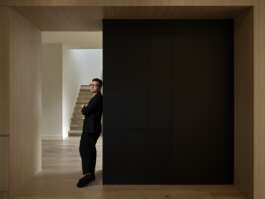
Andrew Sun, founder of Atelier Sun. © Joel Esposito
Andrew Sun
Atelier Sun
Fashion is about individuality and personal expression, where every stitch, seam, and detail matters. Collectible furniture brings that same level of narrative, craftsmanship and distinction to a retail space. While conventional furniture can fade into the background, collectible design engages in conversation, wakes up a space, and creates a moment of discovery and dialogue. It signals that a brand understands design as an essential part of its identity, extending beyond fashion itself. A highly considered piece of furniture, crafted with intention in every aspect, brings another layer to that experience. Like fashion, great design is about total curation, where every element contributes to a cohesive and compelling whole.
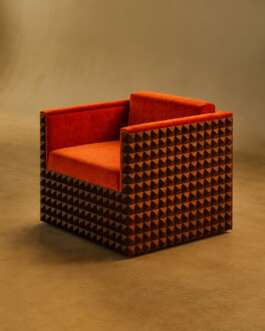

Ellie Richards, ER Studio, Swivel Tramp Chair, 2025. © Julian Bajsel
Ellie Richards. © Kort Havens
ER Studio
Ellie Richards
Conventional retail furniture is built to disappear, holding the product while asking nothing of the shopper. A carved object does the opposite and slows people down on purpose. Every surface is built from thousands of small cuts, and the hours spent are visible in the finished piece. A well made garment carries that same record in its seams. My work draws on vernacular folk carving, where ordinary people made extraordinary things through patience and pattern. In a fashion space, that history makes a case about value. Time and material are the real luxuries, and the customer can see both.
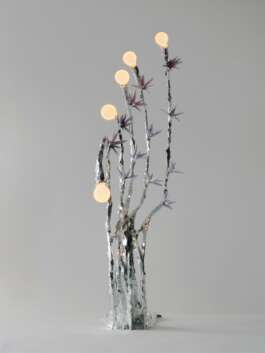

Sara Devic, Blue Clematis, 2026. © Sahra Jajarmikhayat
Sara Devic. © Sahra Jajarmikhayat
Sara Devic
I believe collectible design can bring a sense of individuality and unexpectedness to fashion retail. More elaborate in form, detail, scale, and craftsmanship, these pieces act as accents within a space. They invite a degree of risk-taking and can elicit a sense of wonder. Where conventional retail furniture often serves a practical, cohesive purpose, collectible design can introduce a degree of rawness, irregularity, and imperfection. This can balance the clean, polished, and airy feel of many fashion spaces, adding character, and a sense of tension.
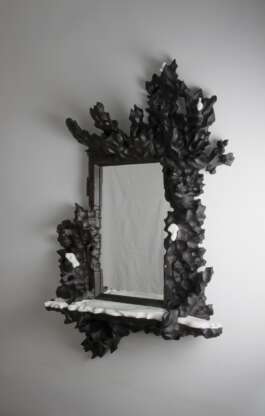

Gábor Góbi, BURNING Mirror, 2025. © Gábor Góbi
Gábor Góbi. © Gábor Góbi
Gábor Góbi
I find this contrast particularly interesting. Fashion is constantly evolving, while collectible design offers an opportunity to slow down, reflect, and create something that lasts.
In my work, I’m drawn to materials that already carry a history. With BURNING MIRROR from my Melting Collection, I transformed a discarded wooden window frame and reclaimed marble into an object that explores change, imperfection, and the passage of time.
For me, these two worlds are not necessarily in conflict. Fashion captures the spirit of the moment, while collectible design can give that moment a more lasting physical presence.
I believe the most interesting objects are not simply made to follow trends, but to tell stories that remain relevant long after those trends have passed.
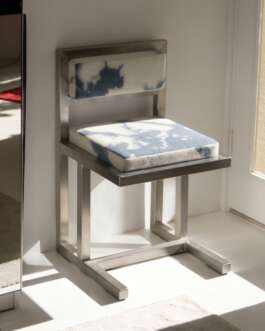
Adam Terrett, Static Piece, 2025. © Adam Terrett
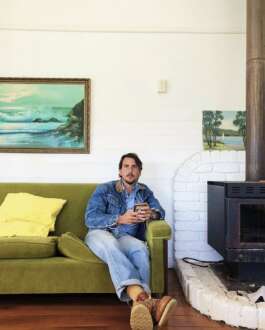
Adam Terrett. © Georgia Storay
Adam Terrett
I don’t try to match the pace. Static Chair was resolved through a series of full-scale timber prototypes, built, sat in and rebuilt before any steel was cut, then fabricated by a silo maker in northern New South Wales. The wool was hand-dyed by a maker who works only with salvaged textiles. None of that is quick. In a fashion space everything turns over each season, so the furniture can be the constant, the thing a customer recognises when they come back. A piece can hold a room for years, while fashion is replaced with the next season.
Sara Devic, Blue Clematis (detail), 2026. © Sahra Jajarmikhayat
Mary Wallis, Snow Mobile, 2026. Marble, aluminum and organic LEDs, 74" H × 41" W × 9" D. © Paul Barbera
Mary Wallis. © Paul Barbera
Julie Morringello, Modernmaine, Faro, 2026. © the artist
Julie Morringello. © Dan Rajter
MA RA MI Crafts, Sculptural Wool Chair, 2026. Hand-braided and knitted Transylvanian wool. © MA RA MI Crafts
MA RA MI Crafts. © Andra Camelia Clitan
Andy Kim, Harry's Console, 2025. Sandblasted and anodized aluminum, 50 × 11.75 × 17.25 in. © Andy Kim Design and Research Office
Andy Kim. © Andy Kim Design and Research Office
Andrew Sun, Atelier Sun, Bridge Table, 2026. Solid blackened ash wood, 40" × 27.5" × 15". © Joel Esposito
Andrew Sun, founder of Atelier Sun. © Joel Esposito
Ellie Richards, ER Studio, Swivel Tramp Chair, 2025. © Julian Bajsel
Ellie Richards. © Kort Havens
Sara Devic, Blue Clematis, 2026. © Sahra Jajarmikhayat
Sara Devic. © Sahra Jajarmikhayat
Gábor Góbi, BURNING Mirror, 2025. © Gábor Góbi
Gábor Góbi. © Gábor Góbi
Adam Terrett, Static Piece, 2025. © Adam Terrett
Adam Terrett. © Georgia Storay
