

Alex Bass, Salon 21. © Alex Bass / Salon 21
COLLECTIBLE In-Depth
Salon 21
October 2026
COLLECTIBLE In-Depth goes behind the scenes of contemporary creation. From the private processes of individual designers to the place of collectible design in the global market, each conversation offers a different way into the field. Today we speak with Alex Bass of Salon 21.
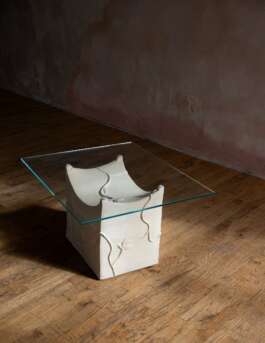
Erin White & Josie Cross / Small Things Studio, Eden Low Table, 2026. Ceramic and glass. © Small Things Studio
"Unlike a home itself, collectible pieces can move with us and evolve alongside our lives."
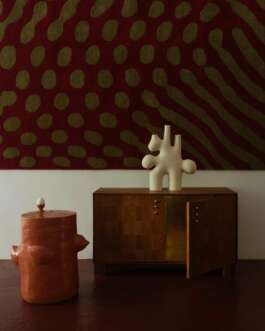
Seth Premo / Arvo Ray Studio, Westbury V02 Cabinet in English Brown Oak, 2025. English brown oak and polished brass. © Seth Premo / Arvo Ray Studio
COLLECTIBLE: How did you get into contemporary collectible design, and why did you start your gallery?
Alex Bass: With a background in art history and the fine art market, I founded Salon 21 to challenge the traditional gallery model and explore how art could become more integrated into everyday life. Inspired by the salon as a space for cultural exchange, I wanted to create environments that felt more like living rooms than white cubes. Collectible design was a natural extension of this philosophy. I’ve never believed in a rigid separation between art and design, and Salon 21 has evolved into a platform championing emerging talent across both disciplines through exhibitions, collaborations, and immersive domestic environments.
C: What do you think has changed most in the conversation around collectible design in recent years?
AB: I think we’re seeing a shift away from disposable consumption toward a more intentional approach to what we live with. There’s a growing appreciation for investing in fewer, higher-quality pieces that demonstrate craftsmanship and longevity, rather than mass-produced furniture with a short lifespan. To me, that’s at the heart of collecting: acquiring objects that hold meaning and value, that we can live with for decades and eventually pass down. We’re also seeing a greater recognition that functional objects can hold the same artistic and cultural significance as fine art, blurring the boundaries between art and design.
C: How do you think the collector base for collectible design can be expanded?
AB: Education and accessibility are key. Helping consumers understand the cost of materials, the craftsmanship involved, and the design history informing contemporary objects allows collectors to make more confident, informed purchases. People want to engage with the stories behind objects, meet their creators, visit studios, and experience works in person. Creating opportunities for this kind of exchange makes collecting feel less intimidating and more personal. At Salon 21, we believe accessibility isn’t necessarily about lowering price points, but about providing the knowledge and context that empower collectors to recognize value.
C: Are collectors in your home market approaching contemporary design differently today than they were five or ten years ago?
AB: The pandemic fundamentally changed our relationship with our homes. We began considering more carefully how we live and what we surround ourselves with, recognizing the home as both a sanctuary and an expression of personal identity. This feels especially relevant in New York, where many people left during the pandemic and returned with a renewed desire to reclaim their spaces. Whether renting or owning, there’s a growing interest in investing in meaningful objects that establish a sense of permanence and individuality. Unlike a home itself, collectible pieces can move with us and evolve alongside our lives.
About Salon 21
Salon 21 is a New York–based gallery and advisory for contemporary collectible art and design, working through exhibitions, programming and interdisciplinary collaborations within immersive, domestic-inspired environments. Established as a new model for presenting collectible works, Salon 21 moves beyond the traditional gallery format to explore how art and design can be experienced as part of everyday life.
For COLLECTIBLE New York 2026, Salon 21 presents a domestic environment bringing together Brooklyn-based ceramic duo Small Things Studio (Josie Cross and Erin White) and furniture designer Seth Premo of Arvo Ray Studio, including a new series of collectible lighting combining White’s hand-built ceramic forms with Cross’s hand-crocheted textile shades.

Small Things Studio for Salon 21 at COLLECTIBLE New York 2026. © Small Things Studio
Alex Bass, Salon 21. © Alex Bass / Salon 21
Erin White & Josie Cross / Small Things Studio, Eden Low Table, 2026. Ceramic and glass. © Small Things Studio
"Unlike a home itself, collectible pieces can move with us and evolve alongside our lives."
Seth Premo / Arvo Ray Studio, Westbury V02 Cabinet in English Brown Oak, 2025. English brown oak and polished brass. © Seth Premo / Arvo Ray Studio
Small Things Studio for Salon 21 at COLLECTIBLE New York 2026. © Small Things Studio
