
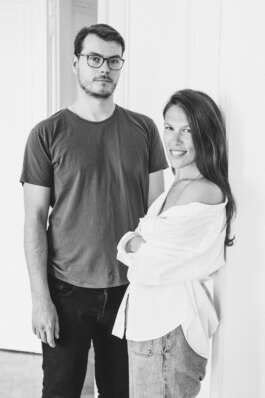

Petra Brajak and Robert V. Bijelic of Brajak Vitberg. © Marja Bizjak
COLLECTIBLE In-Depth
Brajak Vitberg
October 2026
COLLECTIBLE In-Depth goes behind the scenes of contemporary creation. From the private processes of individual designers to the place of collectible design in the global market, each conversation offers a different way into the field. Today we speak with Brajak Vitberg.
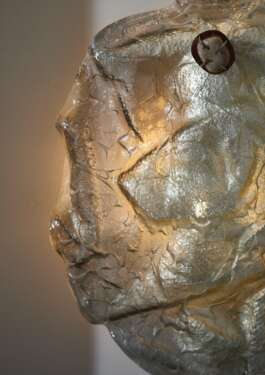
Brajak Vitberg, Henosis, 2026. Glass, 50–200 cm. © Domen Bizjak
COLLECTIBLE: How did you get into contemporary collectible design? What drew you to this way of working?
Brajak Vitberg: We met while studying architecture, and even back then, we both knew we didn’t see ourselves working in a traditional architecture office. We were always more drawn to creating unique objects and furniture, especially lighting, and to the freedom of experimenting with materials and different techniques. What excites us most is the creative process itself — the unpredictability and the fact that you never quite know how a piece will turn out until it’s finished. Our journey into collectible design happened quite naturally. After spontaneously creating our first lighting collection, we connected with a few galleries and started receiving commissions. One thing led to another, and we gradually found ourselves moving further into this field. We both also grew up in artistic families, which naturally shaped our appreciation for creativity and one-of-a-kind objects. Collectible design felt like the perfect space to combine our architectural background with a more intuitive, experimental, and hands-on approach to making.
C: What makes a design collectible in your eyes?
BV: For us, collectible design is about finding a balance between functionality and artistic expression. It’s when an object goes beyond its practical purpose and becomes something that communicates an idea, tells a story, or evokes an emotion. We believe it should have a strong identity and a certain uniqueness, whether through its form, material, or the process behind it. Ultimately, it’s about creating something that feels both functional and sculptural, something that invites curiosity and creates a connection with the person experiencing it.
C: What are the key questions you ask yourself before beginning a new piece?
BV: Before starting a new piece, we often ask ourselves how we want to feel while creating it, and what kind of emotion we want it to evoke once it exists in the world. For us, the journey of making is just as meaningful as the final result. We believe a good design should have the ability to belong anywhere, yet still hold a presence of its own. When we begin designing, we try not to force an idea into existence. Instead, we follow our intuition and allow the process to guide us. We believe the most meaningful pieces are often the ones that somehow find their way to us, rather than the other way around.
"We believe the most meaningful pieces are often the ones that somehow find their way to us, rather than the other way around."
C: Can you briefly describe your process, from the first idea to the finished object?
BV: Over the years, we’ve learned to embrace the unexpected and allow room for mistakes, changes, and the natural behaviour of materials. We believe that the initial idea is only a starting point, never a fixed destination. Especially in collectible design, we find it important to leave space for spontaneity and discovery throughout the process. We like the idea of connecting something familiar with something unexpected, allowing old techniques and new ideas to come together in a different way. From there, we move into experimentation and making, which is probably the part we enjoy most. We allow the process to shape the final result, rather than trying to control every detail from the beginning.
C: How do you navigate the relationship between experimentation and functionality?
BV: For us, it is always about finding a balance between experimentation and function. Lighting is particularly interesting because it can be both a functional object and a way of creating atmosphere. Light does more than illuminate a space; it also changes how we experience materials, textures, and our surroundings. We enjoy creating pieces that serve a purpose while also bringing a certain mood and character to a space.

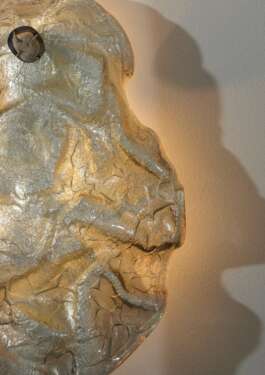
Brajak Vitberg, Henosis, 2026. Glass, 50–200 cm. © Domen Bizjak
C: What can collectible design bring to the daily lives and spaces of the people who collect it?
BV: We believe the objects we live with influence how we experience our everyday surroundings. Collectible design can introduce a sense of discovery into a space — something unexpected that continues to reveal itself over time. The people drawn to these pieces tend to appreciate beauty, craftsmanship, and individuality, and enjoy living with objects they are unlikely to encounter every day. For us, it is about making everyday life a little less ordinary.
C: What does presenting your work in NYC bring to your practice?
BV: New York has a unique energy as a meeting point for different cultures, ideas, and creative disciplines. Presenting our work there is an opportunity to place it in a new context, meet people working in related fields, and exchange perspectives with collectors, designers, and galleries. We are interested not only in the immediate response to our work, but also in the conversations and connections that might develop into future collaborations. Being part of a fair in a city like New York opens up possibilities that are difficult to predict, which is part of what makes the experience exciting.
C: What do you hope collectible design will look like five years from now?
BV: As AI becomes increasingly present across different creative fields, we hope collectible design will continue to place greater value on the human hand, craftsmanship, and the physical process of making. There is something difficult to replicate in the imperfections, unexpected outcomes, and material qualities that emerge through working by hand. We hope there will be an even stronger appreciation for objects that carry the traces of their making and reflect a direct relationship between the maker and the material. Ultimately, we hope collectible design remains a space for experimentation, individuality, and forms of creativity that cannot be fully standardised.
About Brajak Vitberg
Brajak Vitberg is an art and design studio founded in 2019 by two architects from Ljubljana, Slovenia, Petra Brajak and Robert V. Bijelic. The studio strives to create craft elements and make them timeless through an experimental design process, producing everything from handmade and limited-edition small series to unique, one-of-a-kind pieces inspired by materials and forms that create incomplete perfection.
Over the past several years, the studio has collaborated with internationally renowned galleries, received multiple design awards and established a strong presence in the global design market. Known for its acclaimed collections Miami and Isola, Brajak Vitberg creates distinctive lighting and collectible design pieces that can be found in private and public interiors worldwide.

Petra Brajak and Robert V. Bijelic of Brajak Vitberg. © Marja Bizjak
COLLECTIBLE In-Depth
Brajak Vitberg
October 2026
COLLECTIBLE In-Depth goes behind the scenes of contemporary creation. From the private processes of individual designers to the place of collectible design in the global market, each conversation offers a different way into the field. Today we speak with Brajak Vitberg.

Brajak Vitberg, Henosis, 2026. Glass, 50–200 cm. © Domen Bizjak
COLLECTIBLE: How did you get into contemporary collectible design? What drew you to this way of working?
Brajak Vitberg: We met while studying architecture, and even back then, we both knew we didn’t see ourselves working in a traditional architecture office. We were always more drawn to creating unique objects and furniture, especially lighting, and to the freedom of experimenting with materials and different techniques. What excites us most is the creative process itself — the unpredictability and the fact that you never quite know how a piece will turn out until it’s finished. Our journey into collectible design happened quite naturally. After spontaneously creating our first lighting collection, we connected with a few galleries and started receiving commissions. One thing led to another, and we gradually found ourselves moving further into this field. We both also grew up in artistic families, which naturally shaped our appreciation for creativity and one-of-a-kind objects. Collectible design felt like the perfect space to combine our architectural background with a more intuitive, experimental, and hands-on approach to making.
C: What makes a design collectible in your eyes?
BV: For us, collectible design is about finding a balance between functionality and artistic expression. It’s when an object goes beyond its practical purpose and becomes something that communicates an idea, tells a story, or evokes an emotion. We believe it should have a strong identity and a certain uniqueness, whether through its form, material, or the process behind it. Ultimately, it’s about creating something that feels both functional and sculptural, something that invites curiosity and creates a connection with the person experiencing it.
C: What are the key questions you ask yourself before beginning a new piece?
BV: Before starting a new piece, we often ask ourselves how we want to feel while creating it, and what kind of emotion we want it to evoke once it exists in the world. For us, the journey of making is just as meaningful as the final result. We believe a good design should have the ability to belong anywhere, yet still hold a presence of its own. When we begin designing, we try not to force an idea into existence. Instead, we follow our intuition and allow the process to guide us. We believe the most meaningful pieces are often the ones that somehow find their way to us, rather than the other way around.
"We believe the most meaningful pieces are often the ones that somehow find their way to us, rather than the other way around."
C: Can you briefly describe your process, from the first idea to the finished object?
BV: Over the years, we’ve learned to embrace the unexpected and allow room for mistakes, changes, and the natural behaviour of materials. We believe that the initial idea is only a starting point, never a fixed destination. Especially in collectible design, we find it important to leave space for spontaneity and discovery throughout the process. We like the idea of connecting something familiar with something unexpected, allowing old techniques and new ideas to come together in a different way. From there, we move into experimentation and making, which is probably the part we enjoy most. We allow the process to shape the final result, rather than trying to control every detail from the beginning.
C: How do you navigate the relationship between experimentation and functionality?
BV: For us, it is always about finding a balance between experimentation and function. Lighting is particularly interesting because it can be both a functional object and a way of creating atmosphere. Light does more than illuminate a space; it also changes how we experience materials, textures, and our surroundings. We enjoy creating pieces that serve a purpose while also bringing a certain mood and character to a space.

Brajak Vitberg, Henosis, 2026. Glass, 50–200 cm. © Domen Bizjak
C: What can collectible design bring to the daily lives and spaces of the people who collect it?
BV: We believe the objects we live with influence how we experience our everyday surroundings. Collectible design can introduce a sense of discovery into a space — something unexpected that continues to reveal itself over time. The people drawn to these pieces tend to appreciate beauty, craftsmanship, and individuality, and enjoy living with objects they are unlikely to encounter every day. For us, it is about making everyday life a little less ordinary.
C: What does presenting your work in NYC bring to your practice?
BV: New York has a unique energy as a meeting point for different cultures, ideas, and creative disciplines. Presenting our work there is an opportunity to place it in a new context, meet people working in related fields, and exchange perspectives with collectors, designers, and galleries. We are interested not only in the immediate response to our work, but also in the conversations and connections that might develop into future collaborations. Being part of a fair in a city like New York opens up possibilities that are difficult to predict, which is part of what makes the experience exciting.
C: What do you hope collectible design will look like five years from now?
BV: As AI becomes increasingly present across different creative fields, we hope collectible design will continue to place greater value on the human hand, craftsmanship, and the physical process of making. There is something difficult to replicate in the imperfections, unexpected outcomes, and material qualities that emerge through working by hand. We hope there will be an even stronger appreciation for objects that carry the traces of their making and reflect a direct relationship between the maker and the material. Ultimately, we hope collectible design remains a space for experimentation, individuality, and forms of creativity that cannot be fully standardised.
About Brajak Vitberg
Brajak Vitberg is an art and design studio founded in 2019 by two architects from Ljubljana, Slovenia, Petra Brajak and Robert V. Bijelic. The studio strives to create craft elements and make them timeless through an experimental design process, producing everything from handmade and limited-edition small series to unique, one-of-a-kind pieces inspired by materials and forms that create incomplete perfection.
Over the past several years, the studio has collaborated with internationally renowned galleries, received multiple design awards and established a strong presence in the global design market. Known for its acclaimed collections Miami and Isola, Brajak Vitberg creates distinctive lighting and collectible design pieces that can be found in private and public interiors worldwide.