
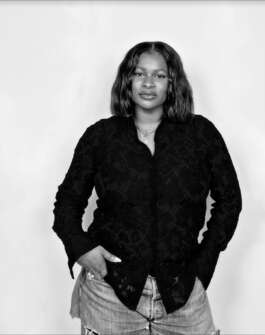
© Lynette Nylander by Huy Luong
COLLECTIBLE Three questions to
Lynette Nylander
July 2026
Today, we have the pleasure of speaking with Lynette Nylander, a writer, editorial and creative director, who is chairing the FASHION section of COLLECTIBLE New York 2026. As the Executive Digital Director of Harper’s Bazaar and former Executive Editorial Director of Dazed, she has built a distinguished career at the intersection of fashion, culture, and creative direction, with previous roles at publications including INDUSTRIE, i-D, and Teen Vogue. In our conversation, Lynette Nylander reflects on the evolving relationship between fashion and design, the ways in which creative disciplines inform one another, and the possibilities that emerge when spaces, objects, and ideas are approached through a shared lens of humanity, beauty, and innovation.
COLLECTIBLE: Your work is contributing to shaping how fashion is seen and understood through editorial and creative direction. What changes when that perspective is applied to the world of collectible design and furniture?
Lynette Nylander: I think that I make sure that I apply the same approach, actually. In terms of fashion or any project I am working on creatively, I let the same principles guide me. Humanity, meaning, does this feel touched and influenced by the human hand? Innovation, meaning, does this feel like something that looks to break a boundary or challenge what we know? And does it champion beauty? I feel that there is such a symbiotic relationship between design, furniture and fashion, and creativity, and I think any creative endeavor is ultimately trying to draw the same conclusion, for the most part.
C: Fashion and collectible design often operate according to different logics and audiences. Where do you see the strongest opportunities for meaningful exchange between the two today?
LN: I think a lot about the popularization of fashion. In my job, one of the most interesting shifts has been how fashion has shifted from an enthusiast pursuit to the mainstream. I also think that about design. Now more than ever, people are interested in how the spaces around them function and look. I think this could be seen negatively, but ultimately, a consideration of public and private space is a good thing and engages people to care more and take more care of the spaces around them.
C: Beyond the aesthetic dialogue, what makes you confident that a presentation can resonate across both fashion and design audiences, creating value for designers, brands and collectors alike?
LN: I really feel that the two are inextricably linked. I think I see such an opportunity to make a visual and curatorial connection between fashion and design through fabrication, through form, and through measure. I think showing how we are all wholly connected creatively is a net positive for everyone.
© Lynette Nylander by Huy Luong
COLLECTIBLE Three questions to
Lynette Nylander
July 2026
Today, we have the pleasure of speaking with Lynette Nylander, a writer, editorial and creative director, who is chairing the FASHION section of COLLECTIBLE New York 2026. As the Executive Digital Director of Harper’s Bazaar and former Executive Editorial Director of Dazed, she has built a distinguished career at the intersection of fashion, culture, and creative direction, with previous roles at publications including INDUSTRIE, i-D, and Teen Vogue. In our conversation, Lynette Nylander reflects on the evolving relationship between fashion and design, the ways in which creative disciplines inform one another, and the possibilities that emerge when spaces, objects, and ideas are approached through a shared lens of humanity, beauty, and innovation.
COLLECTIBLE: Your work is contributing to shaping how fashion is seen and understood through editorial and creative direction. What changes when that perspective is applied to the world of collectible design and furniture?
Lynette Nylander: I think that I make sure that I apply the same approach, actually. In terms of fashion or any project I am working on creatively, I let the same principles guide me. Humanity, meaning, does this feel touched and influenced by the human hand? Innovation, meaning, does this feel like something that looks to break a boundary or challenge what we know? And does it champion beauty? I feel that there is such a symbiotic relationship between design, furniture and fashion, and creativity, and I think any creative endeavor is ultimately trying to draw the same conclusion, for the most part.
C: Fashion and collectible design often operate according to different logics and audiences. Where do you see the strongest opportunities for meaningful exchange between the two today?
LN: I think a lot about the popularization of fashion. In my job, one of the most interesting shifts has been how fashion has shifted from an enthusiast pursuit to the mainstream. I also think that about design. Now more than ever, people are interested in how the spaces around them function and look. I think this could be seen negatively, but ultimately, a consideration of public and private space is a good thing and engages people to care more and take more care of the spaces around them.
C: Beyond the aesthetic dialogue, what makes you confident that a presentation can resonate across both fashion and design audiences, creating value for designers, brands and collectors alike?
LN: I really feel that the two are inextricably linked. I think I see such an opportunity to make a visual and curatorial connection between fashion and design through fabrication, through form, and through measure. I think showing how we are all wholly connected creatively is a net positive for everyone.
