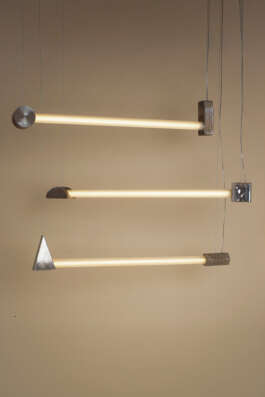
© Julia Jessen
COLLECTIBLE In-Depth
Schneid Studio
March 2026
This series, COLLECTIBLE In-Depth, unveils the backstage of contemporary creation. Tackling various topics from personal designer processes to the position of collectible design on the global design market, COLLECTIBLE In-Depth offers different views to suit all tastes. Today we speak with Schneid Studio.
COLLECTIBLE: Why do you focus on contemporary collectible design? What does it mean to you?
Schneid Studio: We began our studio in 2012, at a time when the term collectible design was not yet widely used. From the beginning, we worked through material, small-scale production and direct engagement with making. For us, design was never only about industrial optimisation, but about authorship, structure and cultural positioning. Today, the field of contemporary collectible design provides a framework for this way of working. It allows objects to operate between function and meaning, system and singularity. It creates space for slower processes, material depth and a clearer articulation of design as a cultural practice rather than solely a market category.
C: What makes a design collectible in your eyes?
SS: A design becomes collectible when it holds both intention and context. It is not limited editions or rarity that define it, but the way it reveals its material logic, its making and its position. A collectible object offers a space for reflection; it invites continued engagement and situates itself not only in a room, but in a story. It is not merely functional, but meaningful. A design that carries an argument, not just a use.
C: What role does material play in your practice?
SS: Material is our starting point, not an afterthought. It is the ground through which we think, test and position ideas. Ceramics, glass, wood: each has its own temporality, resistance and agency. Working with material teaches us to slow down, to accept tension and contradiction rather than erase them. In collectible design, material is a partner; its gravity shapes the work as much as concept or form.
C: How do you question or challenge functionality in your design process?
SS: Function is not a problem to be solved, but a condition to be acknowledged and sometimes reframed. We do not reject utility, we expand it. Function remains present, but it is no longer the sole argument. Our objects allow ambiguity and invite reflection on the act of use itself. They hold space for contemplation, atmosphere and narrative, precisely because they are not reduced to optimization.
C: How does the digital sphere influence your work?
SS: Digital tools broaden our thinking without replacing material reality. They help us explore structure, variation and system logic, but the final object always returns to craft and presence. The tension between digital precision and physical materiality is generative, not a contradiction, but a productive space where form, system and resonance emerge. In collectible design, this dialogue between code and clay becomes part of the object’s voice.

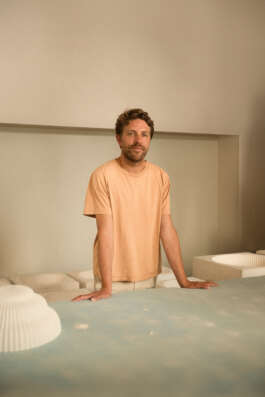
© Julia Jessen, photo by Lena Reetz

© Niklas Jessen, photo by Julia Jessen

© Julia Jessen
COLLECTIBLE In-Depth
Schneid Studio
March 2026
This series, COLLECTIBLE In-Depth, unveils the backstage of contemporary creation. Tackling various topics from personal designer processes to the position of collectible design on the global design market, COLLECTIBLE In-Depth offers different views to suit all tastes. Today we speak with Schneid Studio.
COLLECTIBLE: Why do you focus on contemporary collectible design? What does it mean to you?
Schneid Studio: We began our studio in 2012, at a time when the term collectible design was not yet widely used. From the beginning, we worked through material, small-scale production and direct engagement with making. For us, design was never only about industrial optimisation, but about authorship, structure and cultural positioning. Today, the field of contemporary collectible design provides a framework for this way of working. It allows objects to operate between function and meaning, system and singularity. It creates space for slower processes, material depth and a clearer articulation of design as a cultural practice rather than solely a market category.
C: What makes a design collectible in your eyes?
SS: A design becomes collectible when it holds both intention and context. It is not limited editions or rarity that define it, but the way it reveals its material logic, its making and its position. A collectible object offers a space for reflection; it invites continued engagement and situates itself not only in a room, but in a story. It is not merely functional, but meaningful. A design that carries an argument, not just a use.
C: What role does material play in your practice?
SS: Material is our starting point, not an afterthought. It is the ground through which we think, test and position ideas. Ceramics, glass, wood: each has its own temporality, resistance and agency. Working with material teaches us to slow down, to accept tension and contradiction rather than erase them. In collectible design, material is a partner; its gravity shapes the work as much as concept or form.
C: How do you question or challenge functionality in your design process?
SS: Function is not a problem to be solved, but a condition to be acknowledged and sometimes reframed. We do not reject utility, we expand it. Function remains present, but it is no longer the sole argument. Our objects allow ambiguity and invite reflection on the act of use itself. They hold space for contemplation, atmosphere and narrative, precisely because they are not reduced to optimization.
C: How does the digital sphere influence your work?
SS: Digital tools broaden our thinking without replacing material reality. They help us explore structure, variation and system logic, but the final object always returns to craft and presence. The tension between digital precision and physical materiality is generative, not a contradiction, but a productive space where form, system and resonance emerge. In collectible design, this dialogue between code and clay becomes part of the object’s voice.

© Julia Jessen, photo by Lena Reetz

© Niklas Jessen, photo by Julia Jessen