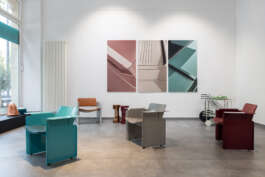
© Patty Neu
COLLECTIBLE In-Depth
Galerie Liberté
March 2026
This series, COLLECTIBLE In-Depth, unveils the backstage of contemporary creation. Tackling various topics from personal designer processes to the position of collectible design on the global design market, COLLECTIBLE In-Depth offers different views to suit all tastes. Today we speak with Galerie Liberté.
COLLECTIBLE: Why do you focus on contemporary collectible design ? What does it mean to you?
Galerie Liberté: When people talk to me about collectible contemporary design, I think first and foremost of “materialized emotion”: creative talents who put their entire soul into reappropriating, with nothing but excellence as their goal and despite a certain societal adversity, a craft that is on the verge of disappearing. As a lawyer by training, I feel this vocation to fight for this talents.
C: What advice would you give to someone starting a collection of contemporary design?
GL: The answer to the previous question has already revealed my emotional relationship with collectible design and I think that the first piece of a collection should be an emotional choice, a coup de foudre. The story behind its creation, how you found this piece, how it made you feel when you discovered it, will forever be part of your memories and accompany you throughout your life.
C: How did you get into collectible design? Why did you start a gallery?
GL: During a trip to New York in 2019, I visited a friend, Umberto Bellardi Ricci, and I was immediately captivated by his universe. To be honest, I wasn't aware of his aura in the design world and I very quickly wanted to share my enthusiasm about his work. Frustrated by the local design offer, which in my eyes was a bit monotonous and rarely handcrafted, I quickly felt that my desire to share could become a business. After having sounded out the world of design galleries a little more and having sorted out the existing models, I made the deliberate choice of a "classic" gallery in a trendy district for reasons of visibility. The next step will be to switch, after two years, to a more intimate concept next autumn.
C: Why is exhibiting in a gallery important for designers rather than showing work only in their own studio?
GL: Although designers today have access to more dynamic communication tools and funding opportunities than in the past—making it possible to sell their work without a gallery intermediary—it would be shortsighted to dismiss collaboration with a gallery. A gallery offers designers new spaces in which to present their work, introduces them to a clientele specific to the gallery, and often connects them with audiences who may not yet be aware of their practice. Moreover, a gallery’s reputation and the trust it has built can play a crucial role in establishing a designer’s visibility and securing their position within a local market.

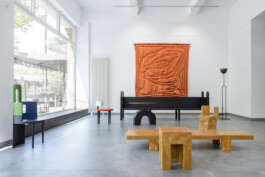
© Patty Neu

© Patty Neu
COLLECTIBLE In-Depth
Galerie Liberté
March 2026
This series, COLLECTIBLE In-Depth, unveils the backstage of contemporary creation. Tackling various topics from personal designer processes to the position of collectible design on the global design market, COLLECTIBLE In-Depth offers different views to suit all tastes. Today we speak with Galerie Liberté.
COLLECTIBLE: Why do you focus on contemporary collectible design ? What does it mean to you?
Galerie Liberté: When people talk to me about collectible contemporary design, I think first and foremost of “materialized emotion”: creative talents who put their entire soul into reappropriating, with nothing but excellence as their goal and despite a certain societal adversity, a craft that is on the verge of disappearing. As a lawyer by training, I feel this vocation to fight for this talents.
C: What advice would you give to someone starting a collection of contemporary design?
GL: The answer to the previous question has already revealed my emotional relationship with collectible design and I think that the first piece of a collection should be an emotional choice, a coup de foudre. The story behind its creation, how you found this piece, how it made you feel when you discovered it, will forever be part of your memories and accompany you throughout your life.
C: How did you get into collectible design? Why did you start a gallery?
GL: During a trip to New York in 2019, I visited a friend, Umberto Bellardi Ricci, and I was immediately captivated by his universe. To be honest, I wasn't aware of his aura in the design world and I very quickly wanted to share my enthusiasm about his work. Frustrated by the local design offer, which in my eyes was a bit monotonous and rarely handcrafted, I quickly felt that my desire to share could become a business. After having sounded out the world of design galleries a little more and having sorted out the existing models, I made the deliberate choice of a "classic" gallery in a trendy district for reasons of visibility. The next step will be to switch, after two years, to a more intimate concept next autumn.
C: Why is exhibiting in a gallery important for designers rather than showing work only in their own studio?
GL: Although designers today have access to more dynamic communication tools and funding opportunities than in the past—making it possible to sell their work without a gallery intermediary—it would be shortsighted to dismiss collaboration with a gallery. A gallery offers designers new spaces in which to present their work, introduces them to a clientele specific to the gallery, and often connects them with audiences who may not yet be aware of their practice. Moreover, a gallery’s reputation and the trust it has built can play a crucial role in establishing a designer’s visibility and securing their position within a local market.

© Patty Neu