

© Mathilde Warnier
COLLECTIBLE In-Depth
Aline Melaet × Amandine Brun Sauvant × Raphaëlle Bosmans
March 2026
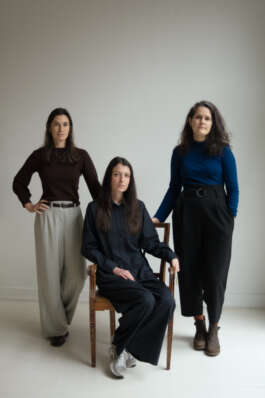
This series, COLLECTIBLE In-Depth, unveils the backstage of contemporary creation. Tackling various topics from personal designer processes to the position of collectible design on the global design market, COLLECTIBLE In-Depth offers different views to suit all tastes. Today we speak with Aline Melaet × Amandine Brun Sauvant × Raphaëlle Bosmans.
COLLECTIBLE: Can you talk about a new piece or collection you are presenting at COLLECTIBLE this year?
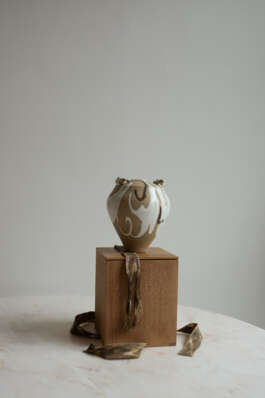
Aline Melaet × Amandine Brun Sauvant × Raphaëlle Bosmans: For COLLECTIBLE Brussels 2026, we present Time out, a series of previously unseen works created for the Tablescapes section. The project unfolds as a sculptural table of unique ceramic, textile, and wooden pieces. Time out explores the pause following intensity, a moment of rest and reset. The table becomes a landscape of suspension where objects hold the memory of gesture while inviting stillness. Time out embodies our beliefs that objects should shape our inner lives and be lived with. The installation seeks to reactivate forgotten objects and forms and includes hybrid works such as a bell-like piece that introduces sound as a subtle ritual cue.
C: What makes a design collectible in your eyes?
AAR: A design becomes collectible when it carries authorship and intention beyond function. Art should be lived with. Our work explores the space where art, craftsmanship, and everyday life meet, creating objects that are both functional and sculptural. Collectibility lies in traces of making, strong material presence, sensitivity, irregularities, and variations that reveal gestures and transformation. Our objects invite lasting engagement and allow for multiple readings over time. By positioning hand-shaped, high-end works at the edge of use and art object, we cultivate attention and curiosity because aesthetics belong in the daily.
C: How do you question or challenge functionality in your design process?
AAR: We do not reject function but hold it in tension. Objects are usable, yet they resist establishing a single gesture or purpose. Function becomes situational, performative, and shaped by context. A piece can be held, arranged, listened to, or used, but it never closes itself into a definition. By balancing usage with sculptural presence, we create space for sensory engagement, contemplation, and playful interpretation. Function is a point of departure rather than an endpoint, allowing works to exist between sculpture, ritual, and everyday life.
C: Can you briefly describe your process?
AAR: Our process is material-led, rooted in dialogue and physical engagement. Working from ceramics, textiles, and wood, we develop a shared vocabulary shaped by slowness, repetition, and attentive gesture. Materials are allowed to resist and transform. Collaboration shifts focus from individual objects to a collective landscape, where forms evolve through exchange. Collectible design offers a framework in which experimentation, savoir-faire, and authorship coexist. The table becomes a site of encounter, bringing distinct practices into a cohesive yet open narrative.
C: How can collectible design reflect or respond to current societal issues?
AAR: In a world of speed and overstimulation, collectible design offers spaces for pause, attention, and reflection. Time out foregrounds rest, care, and embodied presence. Through slow processes and visible traces of making, our work proposes slowness, durability, and sensitivity as forms of resistance. Gathering around the table becomes a ritual reconnecting bodies, materials, and time. Collectible objects invite viewers to slow down, notice gestures, and reconsider contemporary rhythms and priorities.
C: Why do you focus on contemporary collectible design? What does it mean to you?
AAR: We focus on contemporary collectible design because we believe the objects we live with shape our inner lives. In a world that is constantly loud and fast, we choose the opposite. Time out embodies this philosophy: timeless objects meant to endure, not to follow trends but to outlast them. Timeless collectible design, for us, is a form of resistance: a commitment to bringing depth and meaning into everyday spaces. Each piece holds memory and invites contemplation. Home becomes a refuge, a place of calm, shaping our mood, rituals, and sense of peace. Through these objects, ordinary gestures are more attentive and embodied, turning everyday interactions into moments of “time out.”

© Aline Melaet × Amandine Brun Sauvant × Raphaëlle Bosmans, photo by Mathilde Warnier

© Mathilde Warnier
COLLECTIBLE In-Depth
Aline Melaet × Amandine Brun Sauvant × Raphaëlle Bosmans
March 2026
This series, COLLECTIBLE In-Depth, unveils the backstage of contemporary creation. Tackling various topics from personal designer processes to the position of collectible design on the global design market, COLLECTIBLE In-Depth offers different views to suit all tastes. Today we speak with Aline Melaet × Amandine Brun Sauvant × Raphaëlle Bosmans.
COLLECTIBLE: Can you talk about a new piece or collection you are presenting at COLLECTIBLE this year?
Aline Melaet × Amandine Brun Sauvant × Raphaëlle Bosmans: For COLLECTIBLE Brussels 2026, we present Time out, a series of previously unseen works created for the Tablescapes section. The project unfolds as a sculptural table of unique ceramic, textile, and wooden pieces. Time out explores the pause following intensity, a moment of rest and reset. The table becomes a landscape of suspension where objects hold the memory of gesture while inviting stillness. Time out embodies our beliefs that objects should shape our inner lives and be lived with. The installation seeks to reactivate forgotten objects and forms and includes hybrid works such as a bell-like piece that introduces sound as a subtle ritual cue.
C: What makes a design collectible in your eyes?
AAR: A design becomes collectible when it carries authorship and intention beyond function. Art should be lived with. Our work explores the space where art, craftsmanship, and everyday life meet, creating objects that are both functional and sculptural. Collectibility lies in traces of making, strong material presence, sensitivity, irregularities, and variations that reveal gestures and transformation. Our objects invite lasting engagement and allow for multiple readings over time. By positioning hand-shaped, high-end works at the edge of use and art object, we cultivate attention and curiosity because aesthetics belong in the daily.
C: How do you question or challenge functionality in your design process?
AAR: We do not reject function but hold it in tension. Objects are usable, yet they resist establishing a single gesture or purpose. Function becomes situational, performative, and shaped by context. A piece can be held, arranged, listened to, or used, but it never closes itself into a definition. By balancing usage with sculptural presence, we create space for sensory engagement, contemplation, and playful interpretation. Function is a point of departure rather than an endpoint, allowing works to exist between sculpture, ritual, and everyday life.
C: Can you briefly describe your process?
AAR: Our process is material-led, rooted in dialogue and physical engagement. Working from ceramics, textiles, and wood, we develop a shared vocabulary shaped by slowness, repetition, and attentive gesture. Materials are allowed to resist and transform. Collaboration shifts focus from individual objects to a collective landscape, where forms evolve through exchange. Collectible design offers a framework in which experimentation, savoir-faire, and authorship coexist. The table becomes a site of encounter, bringing distinct practices into a cohesive yet open narrative.
C: How can collectible design reflect or respond to current societal issues?
AAR: In a world of speed and overstimulation, collectible design offers spaces for pause, attention, and reflection. Time out foregrounds rest, care, and embodied presence. Through slow processes and visible traces of making, our work proposes slowness, durability, and sensitivity as forms of resistance. Gathering around the table becomes a ritual reconnecting bodies, materials, and time. Collectible objects invite viewers to slow down, notice gestures, and reconsider contemporary rhythms and priorities.
C: Why do you focus on contemporary collectible design? What does it mean to you?
AAR: We focus on contemporary collectible design because we believe the objects we live with shape our inner lives. In a world that is constantly loud and fast, we choose the opposite. Time out embodies this philosophy: timeless objects meant to endure, not to follow trends but to outlast them. Timeless collectible design, for us, is a form of resistance: a commitment to bringing depth and meaning into everyday spaces. Each piece holds memory and invites contemplation. Home becomes a refuge, a place of calm, shaping our mood, rituals, and sense of peace. Through these objects, ordinary gestures are more attentive and embodied, turning everyday interactions into moments of “time out.”

© Aline Melaet × Amandine Brun Sauvant × Raphaëlle Bosmans, photo by Mathilde Warnier