© N° by inside-insight
COLLECTIBLE In-Depth
N° by inside-insight
March 2026
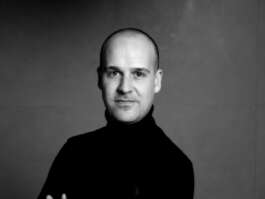
This series, COLLECTIBLE In-Depth, unveils the backstage of contemporary creation. Tackling various topics from personal designer processes to the position of collectible design on the global design market, COLLECTIBLE In-Depth offers different views to suit all tastes. Today we speak with N° by inside-insight
COLLECTIBLE: What does collectible design bring compared to more mass-produced objects?
N° by inside-insight: Collectible design sits between art and functionality, creating something unique through limited editions.
As a designer, you can pour more of your soul into it, since you have to worry less about practical constraints, profitability, or what the market wants.
C: What are the challenges in presenting contemporary collectible design?
N°: Because I design collectible pieces but cannot produce them myself, my biggest challenge is finding the right partners to realise my ideas. It often involves trial and error and searching for new collaborators who are on the same page and willing to think along with me.
These people end up being just as proud of the final result as I am.
C: How does the digital sphere influence your work? What is your relationship to 3D, AI, or other digital tools?
N°: I am not very skilled in IT or digital media, but AI makes it easier for me to render certain ideas in 3D. I usually start with a pencil sketch, then make a drawing with the correct proportions, and finish with a handmade maquette. When I take a photo of that maquette, AI helps me turn the image into an object with the right colours and materials. This gives me a first impression of the final result and allows me to adjust where needed.
C: Can you talk about a new piece or collection you are presenting at COLLECTIBLE this year?
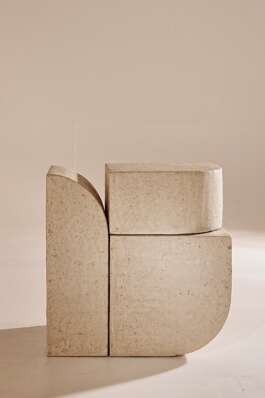
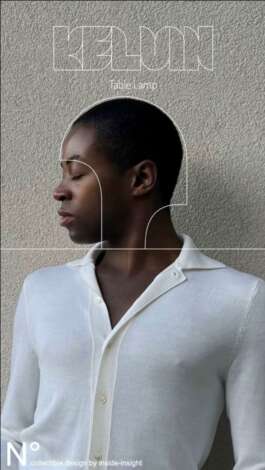
N°: My favourite item this year is the Kelvin Table Lamp and the story behind it. When I first met Kelvin, I had just presented my Caillou collection. He was intrigued by how my designs come to life, and I promised him I would design a lamp and name it after him (since Kelvin also refers to the colour temperature of light). One particular photo of Kelvin inspired the design of the lamp (see photo below). I wanted the lamp to bring the same sense of calm as that photo.
Since then, Kelvin has kind of become my muse, even if that might sound a bit strange.
C: Can you briefly describe your process?
N°: I don’t have a fixed design process. Sometimes I sketch without knowing in advance what the object will become. At other times, I notice a shape or detail somewhere and it sparks an idea for a specific piece. In any case, it always starts with a sketch, which I turn into a scaled drawing. I then often make a handmade maquette or a 3D model using my drawing software. Once I’m confident about the form, the proportions and materials, I look for partners to realise it. Such a process can easily take more than a year.

© Kelvin

© Bart Vermeulen

© N° by inside-insight
COLLECTIBLE In-Depth
N° by inside-insight
March 2026
This series, COLLECTIBLE In-Depth, unveils the backstage of contemporary creation. Tackling various topics from personal designer processes to the position of collectible design on the global design market, COLLECTIBLE In-Depth offers different views to suit all tastes. Today we speak with N° by inside-insight
COLLECTIBLE: What does collectible design bring compared to more mass-produced objects?
N° by inside-insight: Collectible design sits between art and functionality, creating something unique through limited editions.
As a designer, you can pour more of your soul into it, since you have to worry less about practical constraints, profitability, or what the market wants.
C: What are the challenges in presenting contemporary collectible design?
N°: Because I design collectible pieces but cannot produce them myself, my biggest challenge is finding the right partners to realise my ideas. It often involves trial and error and searching for new collaborators who are on the same page and willing to think along with me.
These people end up being just as proud of the final result as I am.
C: How does the digital sphere influence your work? What is your relationship to 3D, AI, or other digital tools?
N°: I am not very skilled in IT or digital media, but AI makes it easier for me to render certain ideas in 3D. I usually start with a pencil sketch, then make a drawing with the correct proportions, and finish with a handmade maquette. When I take a photo of that maquette, AI helps me turn the image into an object with the right colours and materials. This gives me a first impression of the final result and allows me to adjust where needed.
C: Can you talk about a new piece or collection you are presenting at COLLECTIBLE this year?
N°: My favourite item this year is the Kelvin Table Lamp and the story behind it. When I first met Kelvin, I had just presented my Caillou collection. He was intrigued by how my designs come to life, and I promised him I would design a lamp and name it after him (since Kelvin also refers to the colour temperature of light). One particular photo of Kelvin inspired the design of the lamp (see photo below). I wanted the lamp to bring the same sense of calm as that photo.
Since then, Kelvin has kind of become my muse, even if that might sound a bit strange.
C: Can you briefly describe your process?
N°: I don’t have a fixed design process. Sometimes I sketch without knowing in advance what the object will become. At other times, I notice a shape or detail somewhere and it sparks an idea for a specific piece. In any case, it always starts with a sketch, which I turn into a scaled drawing. I then often make a handmade maquette or a 3D model using my drawing software. Once I’m confident about the form, the proportions and materials, I look for partners to realise it. Such a process can easily take more than a year.

© Kelvin

© Bart Vermeulen