© Szkło Studio
COLLECTIBLE In-Depth
Szkło Studio
March 2026
This series, COLLECTIBLE In-Depth, unveils the backstage of contemporary creation. Tackling various topics from personal designer processes to the position of collectible design on the global design market, COLLECTIBLE In-Depth offers different views to suit all tastes. Today we speak with Szkło Studio.
COLLECTIBLE: What can collectible design bring to the daily lives of collectors?
Szkło Studio: I believe it carries stories — of the object, the process, and the maker. It gives us a reason to pause in our hectic lives and reflect on its journey and meaning, as much as to appreciate the effort behind its making. May be sources of intellectual exploration and technical discourse, or centres of a daily conversation. These objects bring a special presence into our lives; something passes through them. They give soul to the spaces they inhabit.
C: How do you position your city within the global design market? What makes it unique?
SS: My main base is Warsaw, which has undergone rapid transformation. During the communist era, the centrally-planned Polish economy was based on mass-scale manufacture. After the transformation of the 1990s, many factories closed, people turned away from a manual labour, yet traditional techniques survived in collective memory. Now, the appreciation for hand-made objects is starting to thrive again.
When I created my first pieces in 2021, collectible design didn’t exist in the local scene. The last two years marked an expansion from a niche to growing mainstream recognition. New galleries and concept stores have opened, design magazines increasingly highlight craft practitioners, and the market is now rapidly flourishing.
C: Can you talk about a new piece or collection you are presenting at COLLECTIBLE this year?
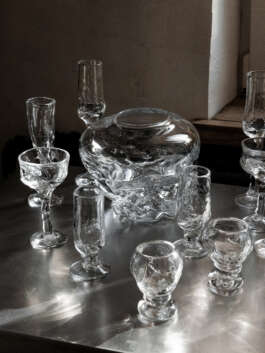
SS: Tablescape's installation draws inspiration from Surrealist practices of intuition and performative gatherings, where shared meals and table settings became spaces for disrupting conventions and generating new meanings. Referencing their historical dinners — the project reimagines the table as a site of encounter, imagination, and collaboration.
Szkło Studio (Aleksandra Zawistowska) invited Polish and Dutch artists: Basia Pruszyńska, Rest Studio (Dominika Gacka, Julia Piekarska), Lindsey Fontijn, Karla Studio (Karolina Pawłowska), Marlou Rutten, and Marieke van de Ven, along scenographers: Remigiusz Dorawa and Jagoda Porębska. Blown-glass, hand-woven textiles, jewelry-scale sculptures, and bespoke lighting form a composition where material, light, and texture construct a collective craft experience.
C: What have you been up to recently? What are the next projects or exhibitions you wish to highlight?
SS: I am experimenting with much more complex glass structures, and learning more about metals and ways of their coatings and finishes. I recently began a collaborative project with five other Polish female designers and artists on a series of objects. It is a challenging process — each of us works with different techniques and materials, and we all have distinct personalities and working styles — but this challenge is precisely what makes the collaboration exciting. It offers a space to grow, broaden my skills, and learn from others. The next stop is Milan Design Week, naturally.
C: How has your practice evolved since you started working in collectible design?
SS: My practice began in a glass workshop, where I started learning the material and its techniques. Over time I introduced new materials, experimented with found objects during art residencies, incorporated digital tools, explored wood, stone, plaster and porcelain. In 2023 I created my first light object combining glass, electricity, and cast metal, later expanding this series for my solo exhibition at Objekt Gallery in Warsaw last year.
I continue to experiment and develop my portfolio. Collaborations with other artists broaden my craft knowledge and enrich my practice. It is an ongoing process of learning and growth.
C: Are you more result- or process-oriented?
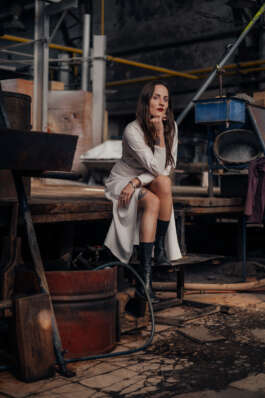
SS: Definitely a process. My life is a process — the result is only a brief moment, later shown in the public sphere. I value my time in the workshop far more, working with craftspeople who share my vision and mission. The process is what shapes and defines most of my life, and my practice is grounded in material and technical research rather than drawings. Physical labour and an intuitive design process are my response to — and departure from — my architectural background.

© Aleksandra Zawistowska, photo by Szymon Adamczyk

© Szkło Studio
COLLECTIBLE In-Depth
Szkło Studio
March 2026
This series, COLLECTIBLE In-Depth, unveils the backstage of contemporary creation. Tackling various topics from personal designer processes to the position of collectible design on the global design market, COLLECTIBLE In-Depth offers different views to suit all tastes. Today we speak with Szkło Studio.
COLLECTIBLE: What can collectible design bring to the daily lives of collectors?
Szkło Studio: I believe it carries stories — of the object, the process, and the maker. It gives us a reason to pause in our hectic lives and reflect on its journey and meaning, as much as to appreciate the effort behind its making. May be sources of intellectual exploration and technical discourse, or centres of a daily conversation. These objects bring a special presence into our lives; something passes through them. They give soul to the spaces they inhabit.
C: How do you position your city within the global design market? What makes it unique?
SS: My main base is Warsaw, which has undergone rapid transformation. During the communist era, the centrally-planned Polish economy was based on mass-scale manufacture. After the transformation of the 1990s, many factories closed, people turned away from a manual labour, yet traditional techniques survived in collective memory. Now, the appreciation for hand-made objects is starting to thrive again.
When I created my first pieces in 2021, collectible design didn’t exist in the local scene. The last two years marked an expansion from a niche to growing mainstream recognition. New galleries and concept stores have opened, design magazines increasingly highlight craft practitioners, and the market is now rapidly flourishing.
C: Can you talk about a new piece or collection you are presenting at COLLECTIBLE this year?
SS: Tablescape's installation draws inspiration from Surrealist practices of intuition and performative gatherings, where shared meals and table settings became spaces for disrupting conventions and generating new meanings. Referencing their historical dinners — the project reimagines the table as a site of encounter, imagination, and collaboration.
Szkło Studio (Aleksandra Zawistowska) invited Polish and Dutch artists: Basia Pruszyńska, Rest Studio (Dominika Gacka, Julia Piekarska), Lindsey Fontijn, Karla Studio (Karolina Pawłowska), Marlou Rutten, and Marieke van de Ven, along scenographers: Remigiusz Dorawa and Jagoda Porębska. Blown-glass, hand-woven textiles, jewelry-scale sculptures, and bespoke lighting form a composition where material, light, and texture construct a collective craft experience.
C: What have you been up to recently? What are the next projects or exhibitions you wish to highlight?
SS: I am experimenting with much more complex glass structures, and learning more about metals and ways of their coatings and finishes. I recently began a collaborative project with five other Polish female designers and artists on a series of objects. It is a challenging process — each of us works with different techniques and materials, and we all have distinct personalities and working styles — but this challenge is precisely what makes the collaboration exciting. It offers a space to grow, broaden my skills, and learn from others. The next stop is Milan Design Week, naturally.
C: How has your practice evolved since you started working in collectible design?
SS: My practice began in a glass workshop, where I started learning the material and its techniques. Over time I introduced new materials, experimented with found objects during art residencies, incorporated digital tools, explored wood, stone, plaster and porcelain. In 2023 I created my first light object combining glass, electricity, and cast metal, later expanding this series for my solo exhibition at Objekt Gallery in Warsaw last year.
I continue to experiment and develop my portfolio. Collaborations with other artists broaden my craft knowledge and enrich my practice. It is an ongoing process of learning and growth.
C: Are you more result- or process-oriented?
SS: Definitely a process. My life is a process — the result is only a brief moment, later shown in the public sphere. I value my time in the workshop far more, working with craftspeople who share my vision and mission. The process is what shapes and defines most of my life, and my practice is grounded in material and technical research rather than drawings. Physical labour and an intuitive design process are my response to — and departure from — my architectural background.

© Aleksandra Zawistowska, photo by Szymon Adamczyk