
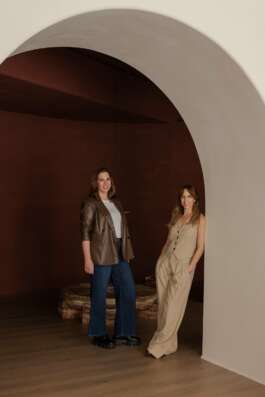
Ilana Goldberg and Dafna Puszkar, K’ab Juun. © Alejandro Ramírez Orozco
COLLECTIBLE In-Depth
K’ab Juun
October 2026
COLLECTIBLE In-Depth goes behind the scenes of contemporary creation. From the private processes of individual designers to the place of collectible design in the global market, each conversation offers a different way into the field. Today we speak with Ilana Goldberg of K’ab Juun.
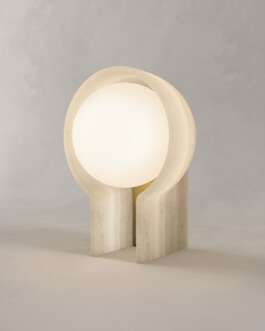
Bandido Studio, DBH02, 2026. © Bandido Studio
"Mexican design has not suddenly become relevant, it has long influenced global visual culture."
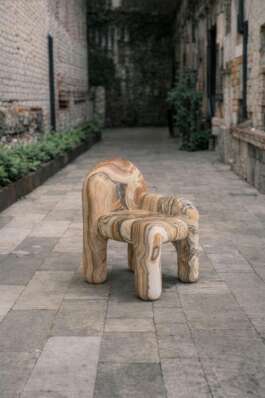
Taller 222, Nube, 2026. © Taller 222
COLLECTIBLE: How would you describe your gallery’s point of view?
Ilana Goldberg: K’ab Juun is rooted in Mexico, but our perspective is contemporary and global. We are interested in work with a strong sense of authorship, material intelligence, and an evident relationship to how and where it was made. We don’t believe Mexican design can be defined by a single aesthetic. What connects the work we represent is a sensitivity to material, place, craftsmanship, and experimentation. We want to honor inherited knowledge without nostalgia, to show how designers can engage with tradition while questioning it, transforming it, and creating something entirely of the present.
C: What role can a gallery play in developing a designer’s practice beyond presenting or selling their work?
IG: We see K’ab Juun as both a gallery and a cultural platform, but above all as a place for conversation, between ourselves and the designers, between different creative practices, and ultimately between the work and the people who experience it. We collaborate closely on commissions, exclusive materials, finishes, and new pieces, while creating meaningful connections with collectors, architects, curators, and editors. Our exhibitions, listening sessions, “charlas”, and gatherings extend those conversations beyond the object. We want to create the conditions for a designer’s practice to evolve, be understood in context, and enter a broader international dialogue.
C: Can you introduce the designers and works you are presenting at COLLECTIBLE New York this year?
IG: For COLLECTIBLE, Materia brings together Ana Batlle, Atelier Ollin, Bandido Studio, Raúl de la Cerda, and Taller Batán. The presentation explores a conversation between time, place, tradition, and materiality, and how each is transformed through a contemporary point of view. Stone and onyx meet solid wood and light, creating relationships between weight, translucency, texture, and form. Several works were developed specifically for K’ab Juun, including Raúl de la Cerda’s Materia + Ónice collection in an exclusive onyx and new Bandido Studio lighting in a special finish. Each piece has its own voice, but together they create a larger dialogue.
C: What connects the works in your presentation?
IG: Material is the starting point, but what connects the works in Materia goes beyond materiality. Each piece reflects a relationship to time, place, inherited knowledge, and transformation. Stone carries geological memory; wood reveals growth and time; light changes our perception of both. What interests us is how contemporary designers engage with these histories without being bound by them. At K’ab Juun, we are always looking for conversations, between materials, between objects, and between distinct creative voices. Materia brings those voices together without asking them to become the same; their differences are precisely what make the conversation meaningful.
C: What does collectible design offer that more mass-produced objects cannot?
IG: There is something deeply human about living with an object that carries the presence of the person who made it. In fact, that idea is embedded in our name: K’ab means “hand” and Juun means “unique” in Mayan. Collectible design can carry authorship, time, experimentation, provenance, and the subtle variations and imperfections of the hand, qualities industrial production cannot replicate. In an increasingly automated and standardized world, that feels particularly meaningful. These pieces are not simply functional or beautiful; they hold knowledge, process, and memory, and those qualities deepen as we live with them.
C: How do you position your local market within the international collectible design landscape?
IG: Mexican design has not suddenly become relevant, it has long influenced global visual culture. What has often been missing is proportional recognition of its makers, authorship, and intellectual traditions. Today, there is extraordinary diversity in Mexico: designers are engaging with ancestral knowledge, extraordinary natural materials, technology, sustainability, and new ways of living. From New York, K’ab Juun wants to provide context as much as visibility. We are not trying to translate Mexican design into something more familiar; we want audiences to encounter it on its own terms and recognize it as an essential voice within contemporary global design.
About K’ab Juun
K’ab Juun is a gallery and cultural platform for contemporary Mexican design, based at 38 Little West 12th Street in New York. Its name joins the Mayan words for “hand” (K’ab) and “unique” (Juun).
At COLLECTIBLE New York 2026, K’ab Juun presents Materia, bringing together Ana Batlle, Atelier Ollin, Bandido Studio, Raúl de la Cerda and Taller Batán.
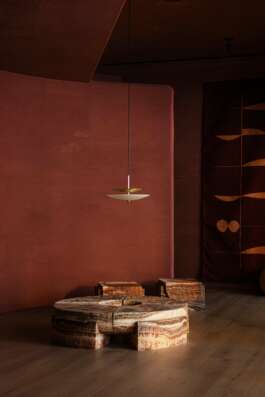
Raúl de la Cerda, Materia, 2026. © Alejandro Ramírez Orozco
Ilana Goldberg and Dafna Puszkar, K’ab Juun. © Alejandro Ramírez Orozco
Bandido Studio, DBH02, 2026. © Bandido Studio
"Mexican design has not suddenly become relevant, it has long influenced global visual culture."
Taller 222, Nube, 2026. © Taller 222
Raúl de la Cerda, Materia, 2026. © Alejandro Ramírez Orozco
